Layer 1 · Experience it
The Graphic Novel What is it like to decide what gets remembered — and to be the one left out?
Ch. 1 · The Clerk's Pen Ch. 2 · A Library That Sings Ch. 3 · Two Columns, Two Worlds Ch. 4 · The Actor Who Wasn't in the Textbook Chapter 1
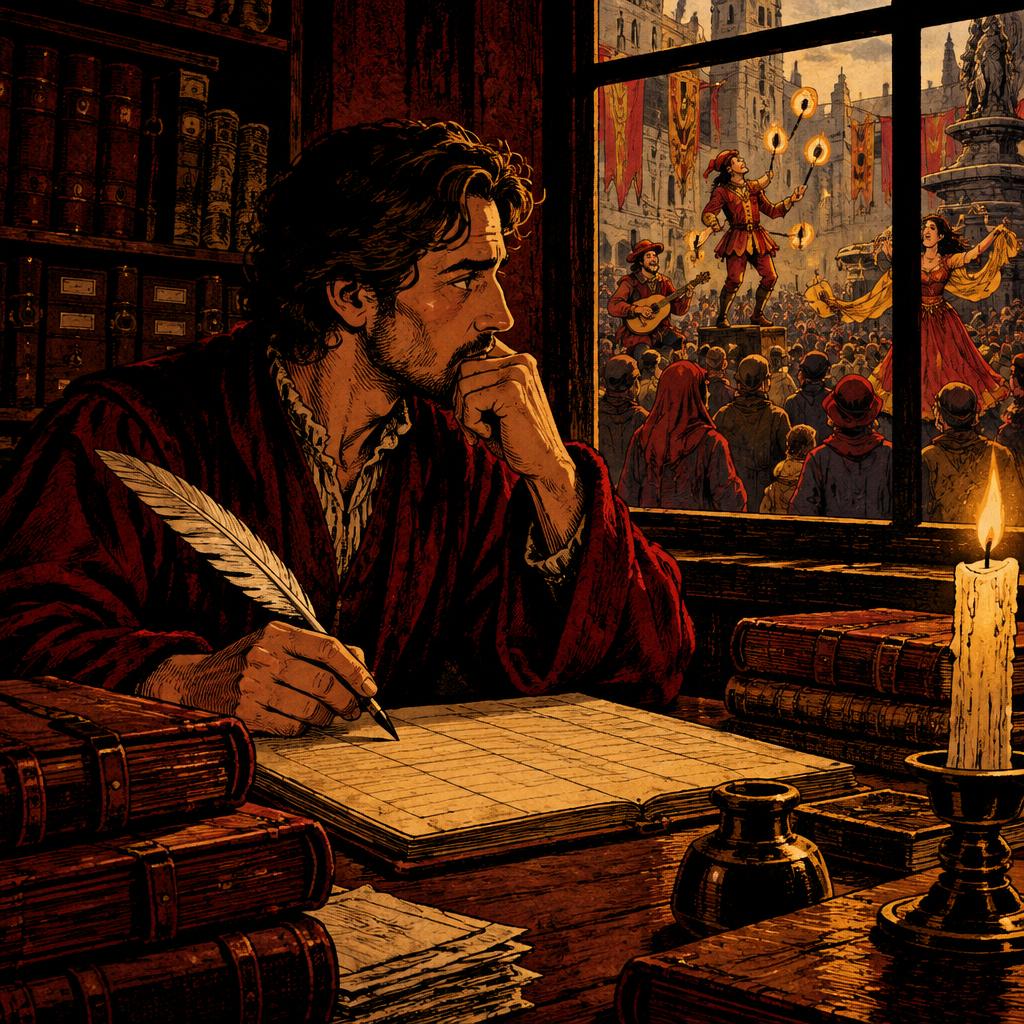
The Clerk's Pen A record office (composite scene) · any century A record office (composite scene), any century A ledger has only so many lines.
The clerk records licences, payments, and fines — the things his employer needs to know. The juggler in the square outside earns no entry.
Silence begins here.
Before any historian arrives, choices have already been made about what becomes a source at all. Trouillot calls this the first moment of silencing.
Centuries later, the ledger survives.
The street performance does not. A future textbook will describe the theatre the clerk could see — and call it 'the theatre of the age'.
Chapter 2
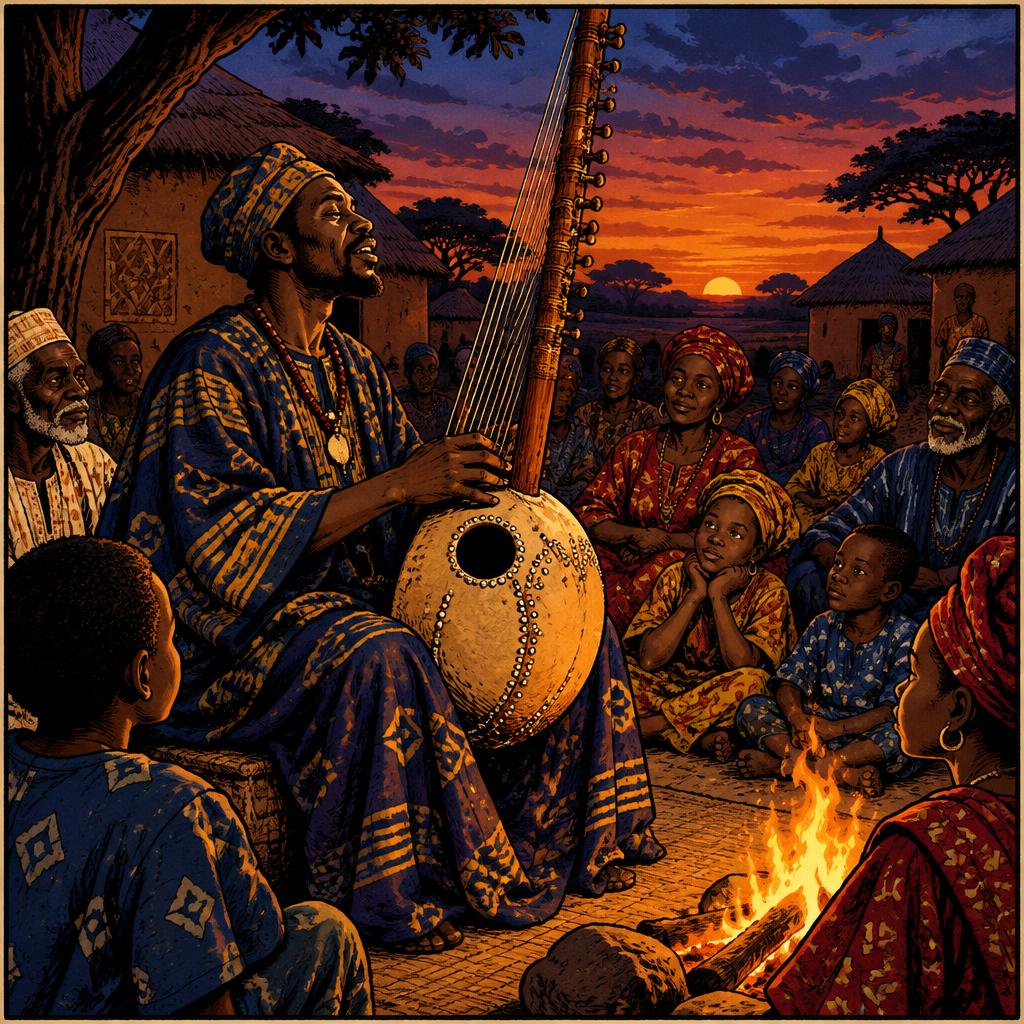
A Library That Sings The Mande world, West Africa · an evening, then and now The Mande world, West Africa, an evening, then and now The jeli tunes the kora.
Tonight's performance carries genealogy, history, and praise. The jeli is a musician, a storyteller, and a historian at once.
Sunjata rises again.
The epic of Mali's founder lives in many versions. Each performance adapts to its listeners — and that variation is part of how the tradition keeps knowledge alive.
No book required.
Memory is passed from teacher to apprentice, body to body. Diana Taylor calls this kind of embodied knowledge the repertoire.
Chapter 3
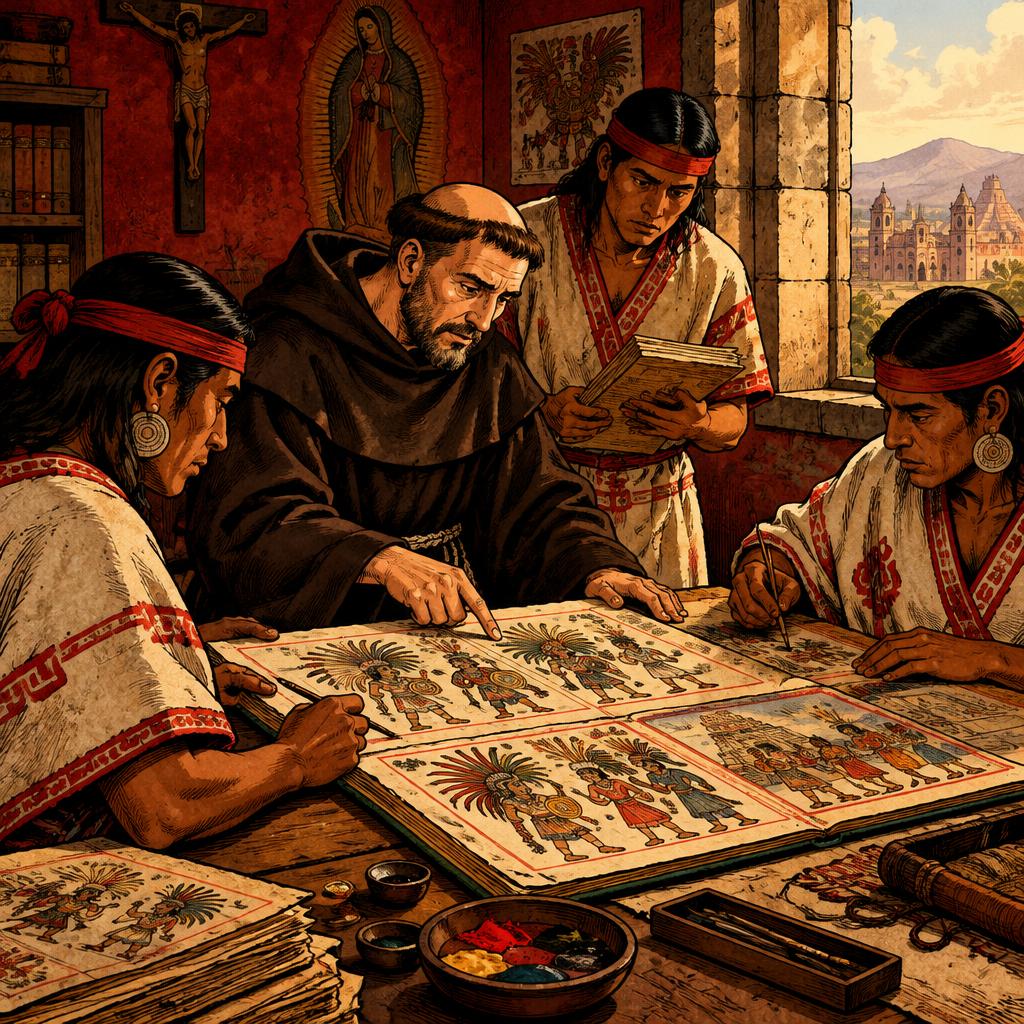
Two Columns, Two Worlds Tlatelolco, New Spain · c. 1550s – 1570s Tlatelolco, New Spain, c. 1550s – 1570s A friar wants to know everything.
Bernardino de Sahagún gathers Nahua elders and trilingual students to document ceremonies, songs, and dances.
Knowledge for what?
Part of the goal is to help missionaries recognise and eradicate 'idolatry'. The same pages that preserve the dances were meant to help end them.
Read both columns.
The Nahuatl and Spanish texts do not always say the same thing. Whose voice is speaking in each?
Chapter 4
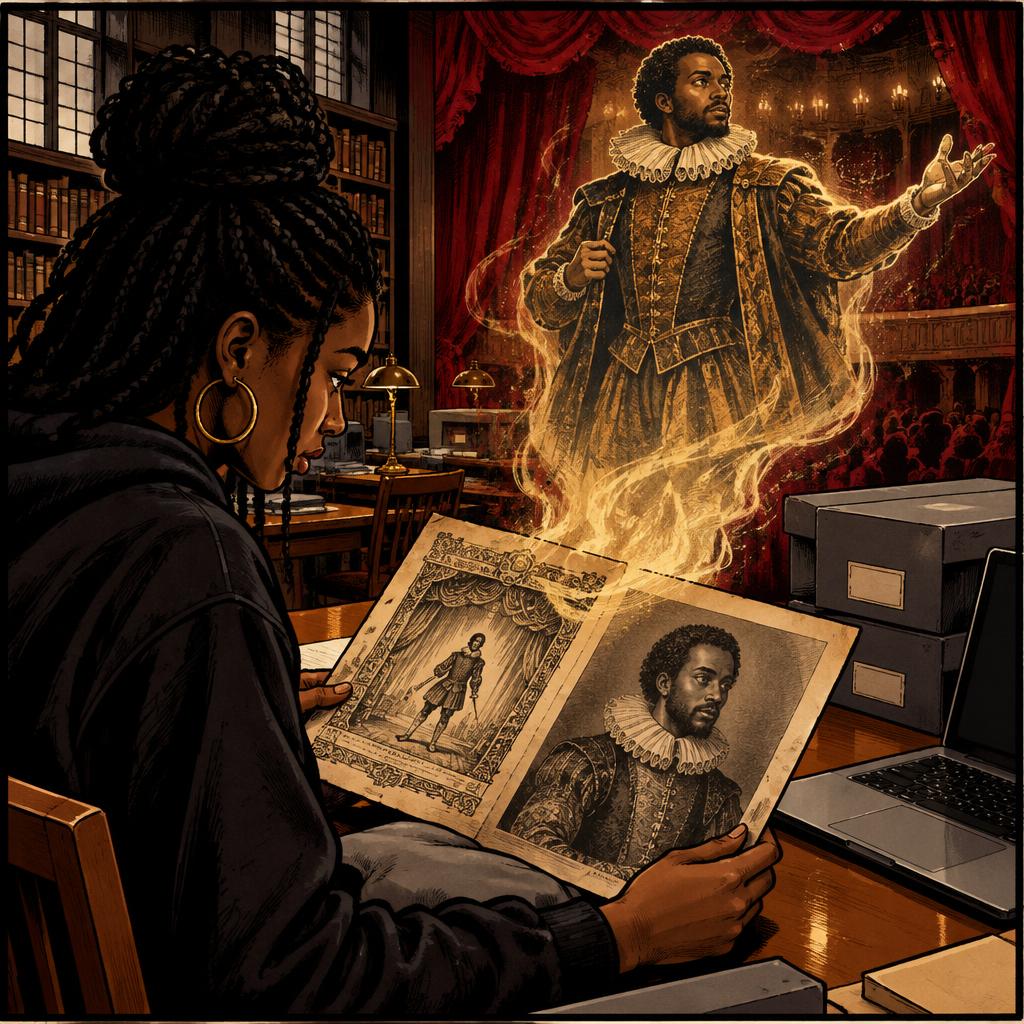
The Actor Who Wasn't in the Textbook A university library, today · present day A university library, today, present day A footnote leads somewhere.
A student finds a passing mention of a Black American actor who played Othello in London in 1833. Her survey textbook says nothing more.
The trail runs through hostile sources.
Newspaper attacks on the African Grove Theatre and on Aldridge's London debut turn out to be some of the best surviving evidence of both.
Reconstruction is a choice.
She assembles playbills, reviews, and later scholarship. Some gaps can be filled with evidence; others can only be named honestly as gaps.
Illustrations are artistic interpretations, not historical depictions. Narration paraphrases the historical record; it does not quote it.
The Theatre History Project · Unit 1: Archives, Memory, and the Making of Theatre History. An evolving educational resource.